Agree the look before making holes
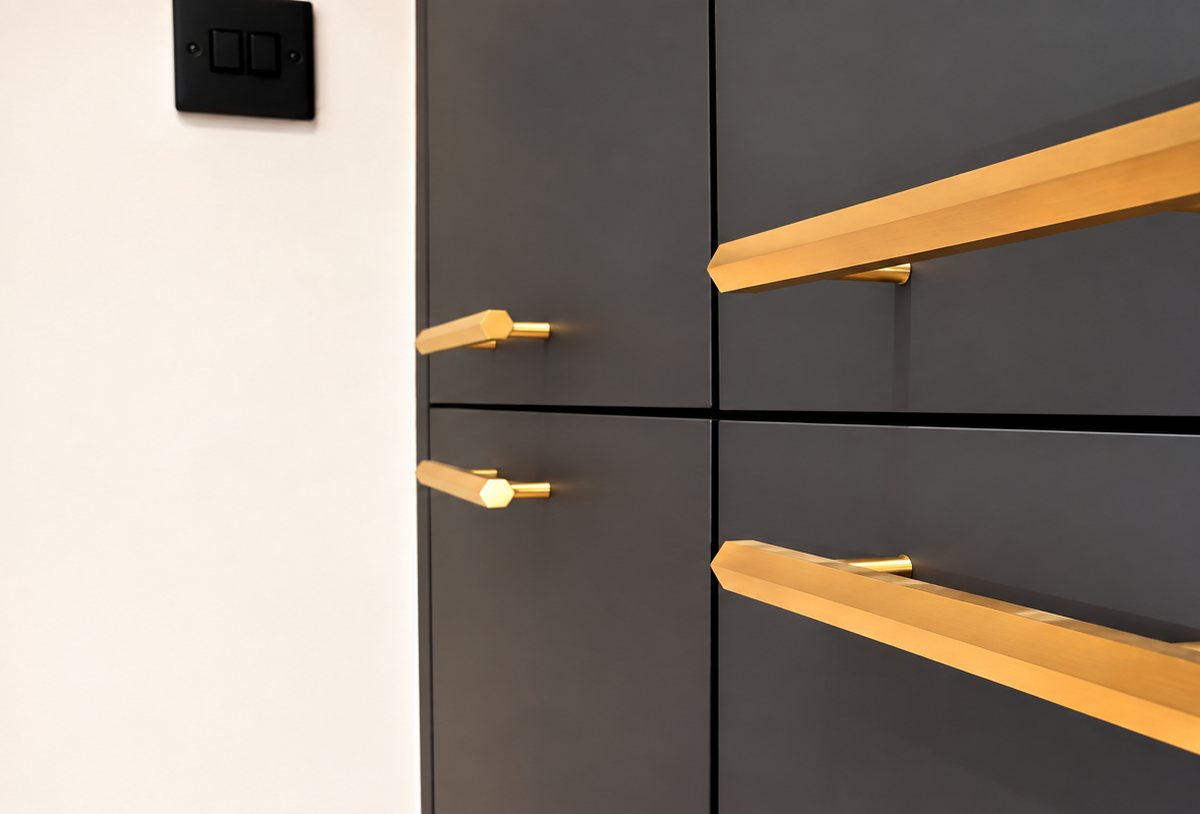
We confirm how the handles should sit on the doors and drawers before drilling. The choice affects both appearance and reach: a wall cabinet is used differently from a deep pan drawer or a tall larder. A sample position helps make that decision tangible. Where the design mixes knobs, cup handles or longer pulls, we check how those different pieces relate across the whole kitchen.
Repeatable positioning and clean fixing
Suitable measuring guides or jigs help carry the agreed position from one front to the next. Fixing centres are checked against the actual hardware, and drilling is carried out with support appropriate to the front material. Fasteners need to suit the thickness of the door or drawer assembly. They should hold the handle firmly without protruding, damaging the finish or restricting the drawer box behind it.
More than the visible handle
Ironmongery includes the fittings that make the kitchen comfortable to use. We check the supplied hinges, buffers and drawer hardware as part of fitting and final adjustment. Soft-close systems are tested where present and adjusted where their design allows. Profile-based and handleless systems are fitted to their own instructions; a moulded grip in a door is not treated as though it were a separate metal handle.
Replacing or matching existing fittings
If your project includes retained cabinets, tell us which fittings are staying. We check existing hole spacing and finish before proposing a replacement handle, because a different size may leave an old fixing visible. Compatibility matters for replacement hinges and dampers too. Any additional replacement work is agreed as part of the scope, with the likely appearance explained before irreversible changes are made.
Your questions, answered
Can I choose a different handle position?
Yes. We discuss your preference and check practical clearances before drilling, particularly near walls, corners and neighbouring doors.
Will any soft-close fitting work with my hinges?
No. Hardware compatibility varies. We check the fitted system before recommending or installing a replacement component.
Can new handles line up with those already fitted?
We can measure the existing positions and assess a matching arrangement. Replacement handles also need compatible fixing centres; changing those may leave old holes visible.
How do you avoid damaging doors when drilling?
We confirm positions first and use tooling appropriate to the door finish, with support where needed to reduce breakout. Any damage found is raised openly so the cause and remedy can be agreed.
Can you fit a handleless rail or metal profile system?
Where it forms part of the supplied kitchen, we check its specific brackets, clearances and cutting requirements. Please provide the system details so this work is included in the installation scope.
How long will installing the handles take?
The quantity, material, fixing pattern and any existing holes all matter. We allow time for layout approval, accurate drilling and final checks within the fitting programme.